Don’t swipe left to go back and scroll another 100 pages looking for the answer to What is the CRM ? Everything you need to know is right here – brought to you by Sharp AI. From an easy-to-understand definition to 5 essential steps for CRM implementation, this blog brings all the necessary information in one place.
Scroll down to read!
What is the CRM Process?
The CRM (Customer Relationship Management) process is a method businesses use to manage interactions with customers and potential clients, from first contact to post-sale support. With the help of technology, CRM systems help businesses track customer data, automate processes, and personalize experiences, ultimately building strong and lasting relationships. Sharp AI’s CRM system makes it easy to manage every touchpoint and streamline your business operations with data-driven insights.
The CRM process revolves around understanding your customers’ needs, attracting them to your business, converting leads, and keeping them loyal—all from a central system.
| Customer lifecycle | CRM process cycle | Objective | Method |
|---|---|---|---|
| Awareness | Brand awareness | Make your brand known through marketing efforts. | Use engaging content on various platforms. |
| Consideration | Lead acquisition | Obtain and qualify leads for potential sales. | Personalize outreach based on lead interests |
| Decision | Lead conversion | Convert qualified leads into paying customers. | Provide compelling offers or discounts. |
| Post-purchase | Customer service | Provide support to ensure customer retention. | Highlight unique value propositions and alignment with their needs. |
| Loyalty | Upsell and cross-sell | Offer additional products to existing customers. | Recommend relevant products and add-ons based on purchase history. |
Core Components & Activities of CRM
Data Collection
Sharp AI’s CRM automatically collects customer data from emails, calls, chats, and social media, consolidating everything in one place for a complete customer view.
Data Management
Sharp AI centralizes all your customer information so you can manage and access it in real-time, eliminating silos and making your team more efficient.
Automation
Automate repetitive tasks such as sending follow-up emails, reminders, and campaign scheduling to save time and reduce human error.
Analysis
Sharp AI uses powerful analytics to help you understand customer behavior, preferences, and trends, making it easier to plan effective strategies and campaigns.
Why is the CRM Process Important?
The CRM (Customer Relationship Management) process plays a vital role in managing your interactions with both current and potential customers. It helps businesses centralize and organize customer data, offering valuable insights to improve customer experiences, increase sales, and streamline marketing and support efforts. By tracking customer touchpoints throughout the entire lifecycle—from first contact to long-term loyalty—CRM processes foster deeper, more meaningful relationships and enhance business performance.
Why the CRM Process is Essential:
Centralized Customer Data
CRM gathers all customer information, such as purchase history, preferences, and interactions, in one place. This complete customer profile makes it easier to offer personalized service, boosting satisfaction and retention.
Improved Customer Satisfaction
With quick access to detailed customer data, your team can resolve inquiries faster and offer personalized solutions. This helps prevent frustrations and keeps your customers coming back for more.
Streamlined Sales & Marketing
CRM helps businesses track leads and manage their sales pipeline more efficiently. By segmenting customers and targeting specific groups with tailored marketing campaigns, businesses can improve conversion rates and optimize sales efforts.
Better Team Collaboration
CRM systems allow sales, marketing, and customer support teams to access the same information, breaking down silos and ensuring everyone is on the same page to provide a unified customer experience.
Increased Efficiency
By automating routine tasks like data entry and follow-up emails, CRM tools reduce the manual workload, freeing up time for more important tasks. This results in improved operational efficiency.
Informed Decision-Making
With CRM, businesses can analyze customer data to identify trends, track performance, and make data-driven decisions. These insights help you better understand customer behavior and adjust your strategies accordingly.
Long-Term Business
Growth: A well-executed CRM process helps build lasting customer relationships. By consistently providing personalized experiences, businesses increase customer loyalty, improve customer lifetime value, and create opportunities for upselling and cross-selling.
In short, the CRM process is much more than just managing customer interactions. It helps businesses optimize every aspect of the customer lifecycle—building stronger relationships, improving customer experiences, and driving business growth.
5 Key Steps in CRM Process
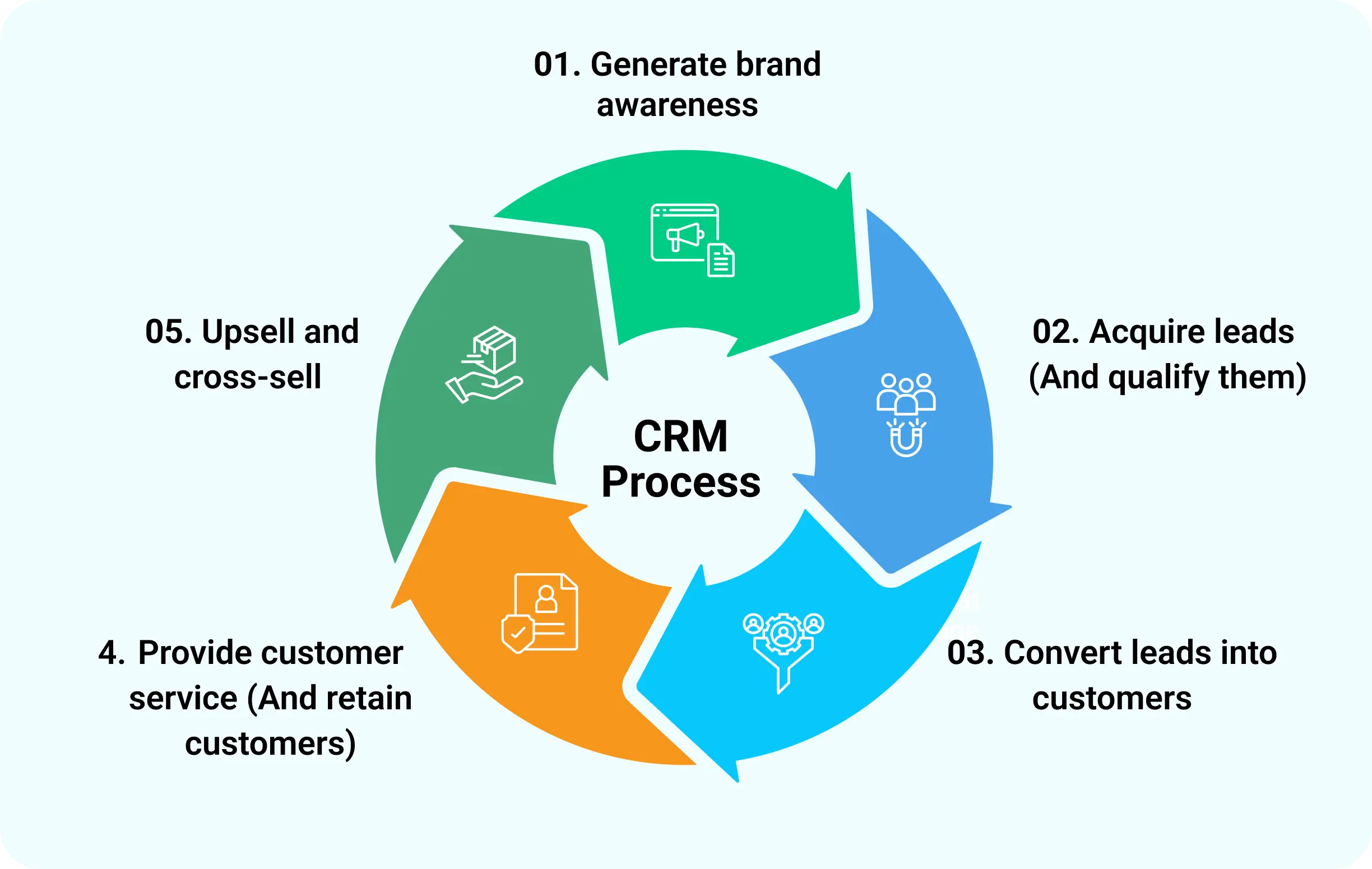
A well-structured CRM (Customer Relationship Management) process is essential for any business looking to enhance customer experiences, drive sales, and retain loyal customers. Here’s a detailed breakdown of the 5 key steps in the CRM process that businesses must follow to achieve success:
1. Generate Brand Awareness
The first step in any CRM process is creating brand awareness. You need to make potential customers aware of your brand, services, or products. Without awareness, there’s no chance to build customer relationships.
Sharp AI helps you automate the process of generating brand awareness by integrating CRM with marketing automation tools. It tracks and analyzes customer interactions across various touchpoints, from social media to emails, so you can create targeted campaigns that reach the right audience at the right time.
2. Acquire Leads (And Qualify Them)
Once potential customers know about your brand, it’s time to generate and capture leads. This is where CRM systems help identify prospects and gather their contact information through various channels such as websites, emails, and social media.
Sharp AI integrates predictive analytics to help you identify the most qualified leads. It scores leads based on customer behavior, interests, and engagement, ensuring your sales team focuses on the best opportunities.
3. Convert Leads into Customers
The next step is converting your qualified leads into actual customers. At this stage, your CRM helps guide prospects through the sales pipeline, nurture relationships, and close deals.
With Sharp AI’s CRM, you can automate follow-ups, schedule reminders, and personalize communication, ensuring your leads are nurtured effectively. By analyzing past interactions, it suggests the most effective approach for closing sales.
4. Provide Customer Service (And Retain Customers)
Customer retention is just as important as acquisition. Providing excellent customer service at every touchpoint ensures that your customers stay loyal, continue purchasing, and become advocates for your brand.
Sharp AI’s CRM enables seamless customer service by automating routine tasks like ticket creation, follow-ups, and inquiries. It also tracks customer satisfaction and feedback, helping your team stay proactive and address issues quickly to keep your customers happy.
5. Upsell and Cross-sell
The final step in the CRM process is expanding relationships with existing customers. By analyzing customer data, businesses can identify upselling and cross-selling opportunities, increasing lifetime customer value.
Sharp AI analyzes customer purchase history and behaviors to suggest relevant products or services, ensuring your sales team can offer personalized upsells or cross-sells. By delivering tailored recommendations, you increase sales and enhance customer satisfaction.
How to implement the CRM process?
The Customer Relationship Management (CRM) process is essential for any business looking to streamline its customer interactions and improve sales, marketing, and service. Implementing a CRM system involves several key steps that help businesses organize data, automate tasks, and improve performance. Here’s a breakdown of the critical steps you need to follow for a successful CRM implementation:
1. Select the Right CRM Software
Choosing the right CRM system is the foundation of a successful CRM process. It should align with your business needs, whether you’re focused on sales, customer service, marketing, or all three. When selecting a CRM, consider these factors:
- Features: Look for features like sales pipeline management, marketing automation, and customer service tools.
- Ease of Use: The software should be user-friendly and easy to navigate for your team.
- Scalability: Make sure the CRM can grow with your business as your customer base and operations expand.
- Integration: Ensure the CRM integrates smoothly with your existing tools (like email, social media, and marketing platforms).
2. Capture, Organize, and Manage Data
Once the CRM software is in place, it’s time to gather and organize your customer data. This step is crucial for effective CRM, as accurate and well-organized data drives meaningful interactions. Here’s how you can do it:
- Capture Customer Data: Gather relevant customer information, including contact details, purchase history, preferences, and past interactions.
- Organize Data: Use the CRM to centralize this data so all teams (sales, marketing, customer service) have access to a single customer view.
- Manage Data: Regularly clean and update the data to ensure its accuracy and relevance. Sharp AI CRM automates this process, reducing manual errors and ensuring that data is always current and actionable.
3. Automate Processes and Workflows
Automation is one of the main reasons businesses implement a CRM system. By automating repetitive tasks, you can free up time for your team to focus on more strategic efforts. Here are some processes to automate:
- Lead Management: Automatically capture and assign leads, track their progress, and notify your sales team when to follow up.
- Email Campaigns: Set up automated email campaigns based on customer behavior, such as abandoned cart emails or personalized promotions.
- Customer Support: Use chatbots or AI-driven tools to handle routine customer inquiries and provide instant support.
Sharp AI CRM excels in automating these processes, saving your team valuable time while ensuring no customer is overlooked.
4. Monitor Performance and Optimize CRM
Implementing a CRM system is just the beginning. To ensure it’s effective, you need to continuously monitor its performance and make adjustments. Here’s how:
- Track Key Metrics: Use CRM reporting tools to track important metrics like sales conversions, customer retention rates, and campaign effectiveness.
- Customer Feedback: Collect feedback from customers and your team to identify any areas for improvement.
- Optimize Workflow: Continuously refine workflows based on insights from data, ensuring that all teams work more efficiently and provide better customer experiences.
With Sharp AI CRM, performance tracking is automated, providing real-time data and insights to help you make informed decisions and continually improve your processes.

What are the Benefits of the CRM Process?
The Customer Relationship Management (CRM) process is not just about managing contacts, it’s a key business strategy that can significantly enhance sales, improve customer experiences, and optimize operations. By integrating CRM software like Sharp AI CRM into your business, you can streamline your processes, improve collaboration, and boost efficiency. Here’s a breakdown of how the CRM process benefits your business:
1. Sales and Revenue Growth
A robust CRM process helps businesses maximize sales opportunities and drive growth by:
- Increased Sales: CRM software helps sales teams prioritize high-potential leads, manage the sales pipeline effectively, and enable upselling and cross-selling strategies.
- More Productive Teams: Automation of administrative tasks like data entry and follow-ups frees up valuable time for your sales reps, enabling them to focus on closing deals.
- Accurate Forecasting: With a CRM system, businesses can forecast sales trends more accurately, allowing for better resource allocation and planning.
2. Improved Customer Experience and Retention
Customer satisfaction is crucial, and CRM software plays a key role in building strong relationships:
- Enhanced Customer Satisfaction: CRM systems allow for quicker, more personalized responses to customer inquiries and service requests, leading to increased satisfaction.
- Higher Customer Retention: By tracking customer behavior and preferences, CRM systems help you deliver tailored solutions, leading to higher loyalty and repeat business.
- Single Customer View: With a unified view of each customer’s interaction history, teams can provide more consistent and informed customer service, preventing confusion and ensuring a seamless experience.
3. Operational Efficiency
A well-implemented CRM system brings significant operational benefits by:
- Streamlined Processes: Routine tasks like appointment scheduling, follow-up emails, and lead tracking are automated, improving productivity across sales, marketing, and customer service.
- Centralized Data: All customer information is stored in one place, making it easier for teams to access up-to-date details, improving collaboration and decision-making.
- Better Team Collaboration: CRM software breaks down silos between different departments, ensuring that everyone has access to the same information, leading to smoother workflows.
4. Data and Strategy Optimization
Leveraging data is one of the biggest advantages of CRM systems:
- Actionable Analytics: CRM systems offer powerful dashboards and reports that help businesses track performance, identify trends, and monitor customer behavior, enabling better decision-making.
- Informed Decisions: The data collected by your CRM enables data-driven decisions for marketing campaigns, sales strategies, and customer retention efforts.
- Scalability: As your business grows, your CRM system grows with you. It supports increased complexity and customer volume, making it easier to scale operations.
The Bottom Line
For your business to thrive, succeed, and sustain, you need structure. Structure comes from a centralised space that allows you to manage every task without jumping from one place to another. With Sharp AI CRM, your sales department, marketing, and reputation taskforces can avoid doing meager tasks and focus on achieving measurable results within a month. Book a free demo right here to get started on your 1-month revamp journey.